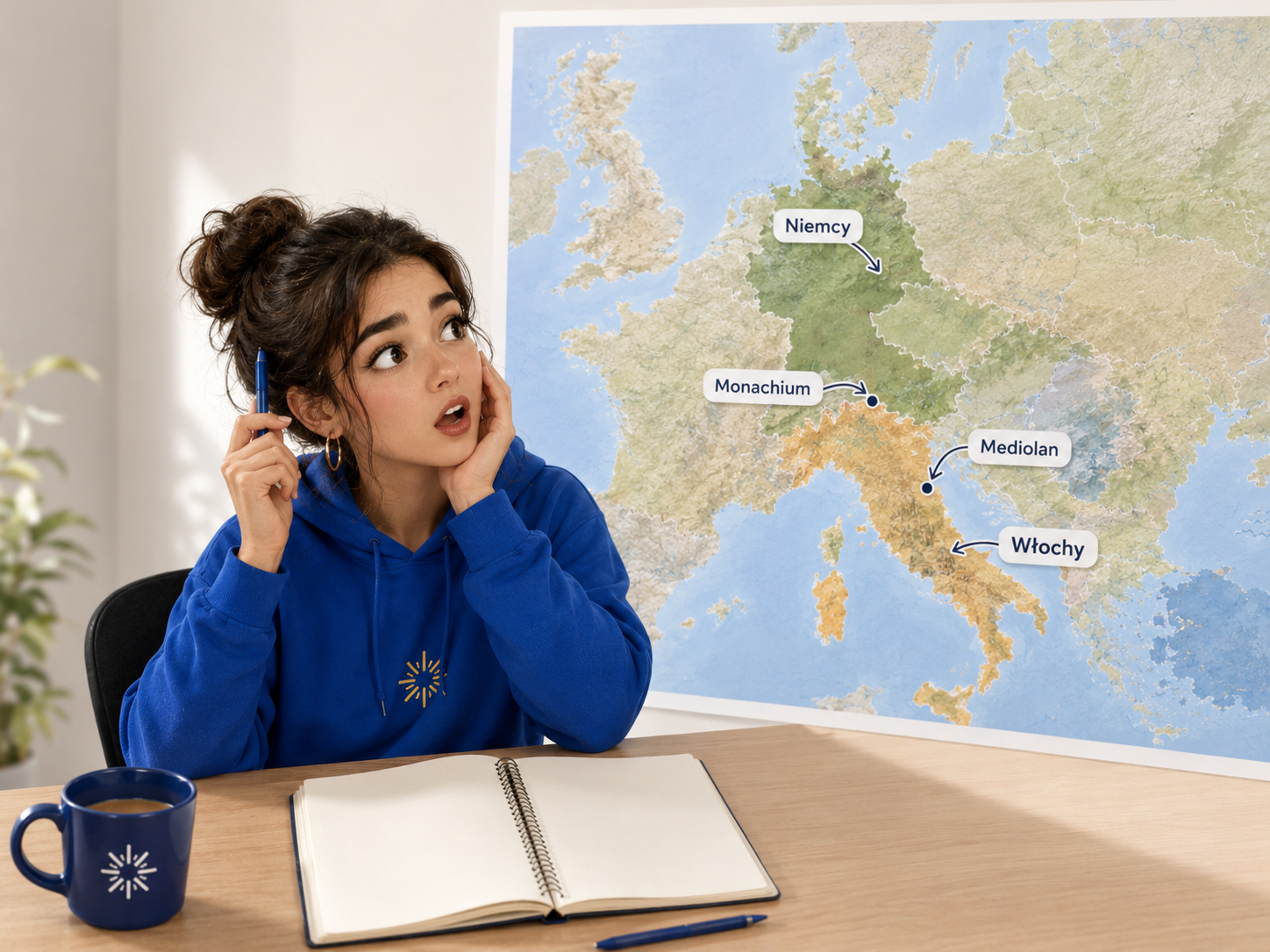
If you’re just starting to learn Polish, here is a quick little test. Can you guess which cities and countries these are? Mediolan, Monachium, Kolonia, Lipsk, Drezno, Włochy, Niemcy.
The answers are: Milan, Munich, Cologne, Leipzig, Dresden, Italy, Germany.
Mind-blowing? Today, we’re sitting down with Katsiaryna Kinzhibala, a lecturer at the Together language school, to unpack why these names aren’t just cheekiness but a reflection of deep linguistic history. We'll look at how students react, how to memorize these quirks when everything feels completely illogical, and why native Polish speakers have shifted from saying na Ukrainie to using w Ukrainie.
"Italy surprises students from all countries the most"
According to Katsiaryna, when it comes to Polish toponyms, Italy raises the most questions among learners:
“In my view, students are most surprised by Polish state and city names that differ wildly from their equivalents in other languages. Perhaps the most striking example is Italy (Włochy). Most languages use a variation of ‘Italia’, so learners definitely don’t expect Polish to use a completely unrelated term,” Katsiaryna explains.
Why is Italy called Włochy in Polish? In short, it’s a historical leftover rooted in the old word "volokh" (Vlach). Ancient Germanic tribes used this term to describe Romance-speaking populations, and the Slavs adopted the label from them. Over time, it became permanently attached to Italian lands in the Polish lexicon.
Pro tip: To make it easier, language teachers sometimes recommend linking it to the Polish word for hair (włosy). There’s a fun, lighthearted legend that Italians were historically thought to be very "hairy" due to their southern phenotype, which helps students make a quick mental connection. Just remember: linguistically, the two words have absolutely nothing to do with each other—it's just a handy mnemonic device!
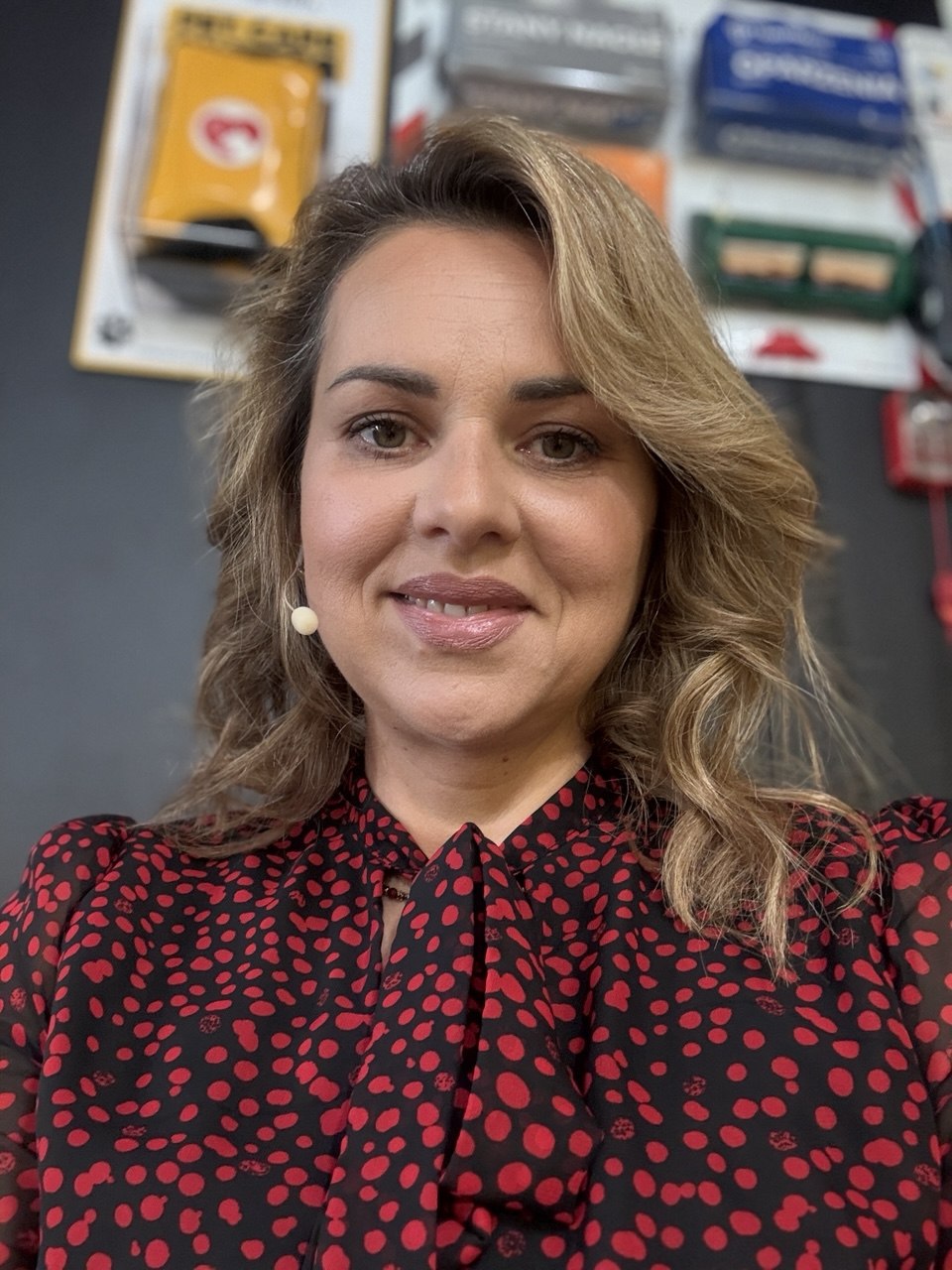
Kateryna Kinzhibalo is a Polish language teacher at Together school in Wrocław.
Why do we say "in Germany" and "in Katowice"?
Another stumbling block for students is the word for Germany—Niemcy. Most difficulties pop up in the Locative case (miejscownik), which answers the question "where?" In Polish, many country and city names are grammatically plural, meaning they take the -ach ending in the Locative case.
How do you get used to it? Katsiaryna suggests keeping an open mind toward the language. Once the language becomes more familiar, these counter-intuitive forms stop feeling like a roadblock and start sticking naturally:
“When it comes to memorizing these names, simple logic doesn’t always apply. A lot of them have historical roots embedded hundreds of years ago. To some extent, you just have to absorb and memorize them through regular exposure to the language,” says the Together lecturer.
Here is how it looks in practice:
- Niemcy (Germany) ➔ w Niemczech
- Włochy (Italy) ➔ we Włoszech
- Czechy (Czech Republic) ➔ w Czechach
- Stany Zjednoczone (United States) ➔ w Stanach Zjednoczonych
- Węgry (Hungary) ➔ na Węgrzech (Exception: this one uses the preposition "na")
This exact rule applies to many Polish cities that only exist in plural form. Just as it sounds natural in English to say "in the Netherlands," native speakers use plural locatives for cities like Katowice or Kielce:
- Katowice ➔ w Katowicach
- Tychy ➔ w Tychach
- Kielce ➔ w Kielcach
- Suwałki ➔ w Suwałkach
Language is alive: Why Poles increasingly say "w Ukrainie" (in) rather than "na" (on)
While both options have remained grammatically permissible, tthe Polish Language Council officially recommended in 2022 that speakers transition to using the preposition w (in).
This applies not only to Ukraine and Belarus (w Białorusi), but also to Lithuania, Latvia, Slovakia, and Hungary. Why the sudden shift? The Council points to deep historical context that is long overdue for a re-evaluation. Here is a key excerpt from their statement:
“The linguistic tradition favoring ‘na’ and ‘do’ for certain neighboring countries developed long ago, when state borders and the very concept of statehood were entirely different. It is a relic of the past, not a questioning of the sovereignty of Ukraine, Lithuania, Latvia, Belarus, Slovakia, or Hungary. However, regardless of the historical origins of a custom, what matters is how it is perceived by the people it affects.”
Katsiaryna points out that while the modern social landscape influences language, systemic changes take time:
“Certain terms and forms shift under the influence of social and political events. We see this clearly with the phrase w Ukrainie. However, terms deeply rooted in the fabric of the language evolve much more slowly. It’s tough to predict the future, but I believe these traditional Polish dualities will remain in use for quite a while,” she summarizes.
Want to stop stumbling over endings?
The absolute fastest way to start speaking confidently is through group practice guided by professional instructors. Join us at the Together school to master Polish with teachers who explain not just the how, but the why. We know how to take the intimidation out of grammar: our lessons are packed with mnemonic life hacks, songs, associations, and games so the material clicks instantly.
To keep your learning journey as comfortable as possible, we build dedicated beginner groups: one track for Slavic-speaking students and a separate track tailored to those coming from non-Slavic backgrounds. That way, the pacing is always optimized specifically for you.
Pick your ideal learning format here.