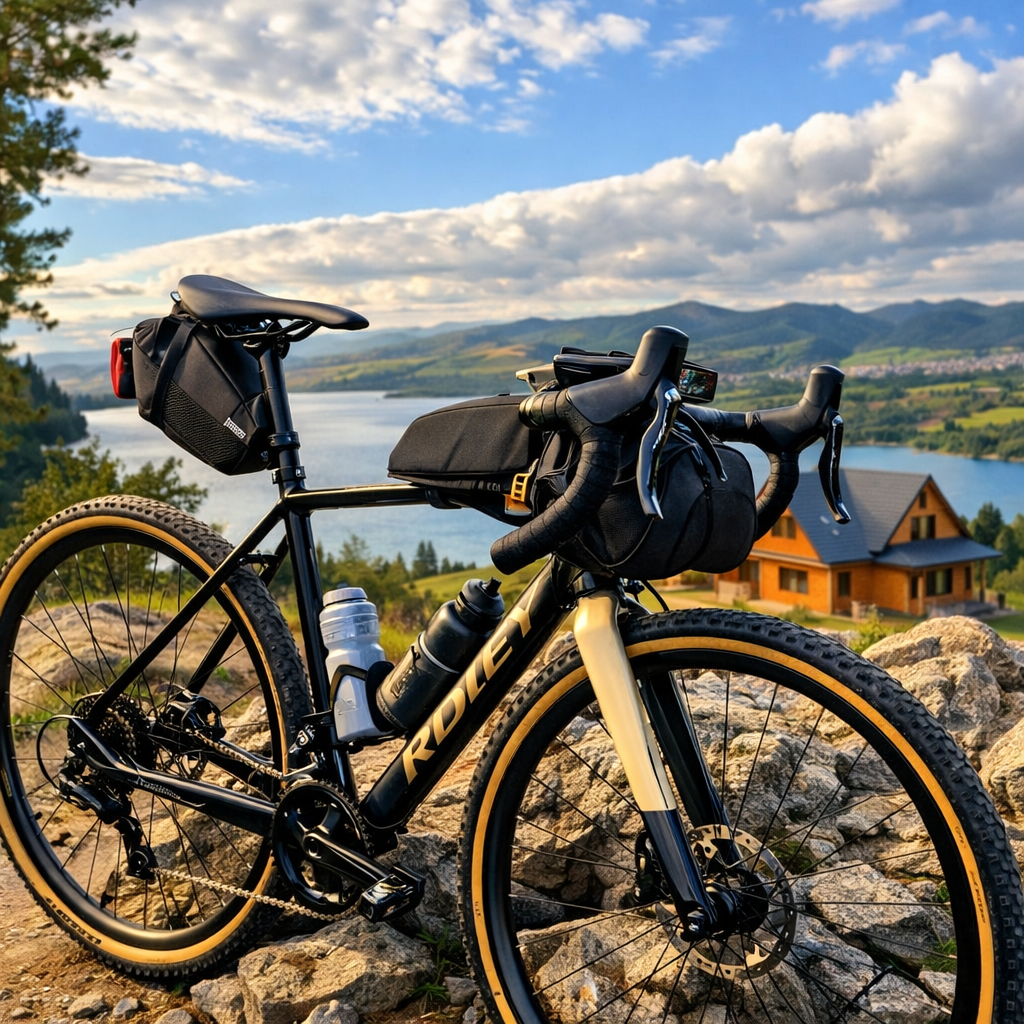
On April 1st, the global "30 Days of Biking" campaign kicked off. It’s a challenge for cycling enthusiasts: you have to ride every day, often during a time of year when the weather is far from ideal, to jumpstart the season. While the campaign originated in America, it became incredibly popular in Belarus and Ukraine. In Poland, however, it feels like this event has largely flown under the radar.
So, what is life like for cyclists here? How do they spend their time, and can a bike actually help you learn Polish? We sat down with Jerzy, a dedicated cyclist from Belarus who has lived in Wrocław for four years, to find out.
"Dumb Luck and Bravery": Choosing by Color and 120 km Without Training
In Belarus, Jerzy and his family lived in a regional center, so after moving, he chose the smaller city of Wrocław over bustling Warsaw. Cycling has been part of his life since childhood—first racing around the yard with friends or going fishing, and later, after a break, discovering his first MTB.
— At that time, I knew nothing about frame sizing; I just picked it based on the color. I ended up with a massive bike that didn't fit me at all. My friends and I started riding further and further, traveling across the entire region. The essence of those trips could be described by the motto "Dumb Luck and Bravery." I specifically remember a season opener where we rode 120 km with completely untrained legs. I didn't even make it home on my own—I got a flat, and a friend had to evacuate me by car. But those are the rides you remember for a lifetime.
Gradually, his approach became more conscious. The portal poehali.net became a source of shared experience. Yet, Jerzy remained a "loner" or rode only with close friends. He knew about the "Naliboki" marathon—Belarus's largest amateur festival in the wild forests—but didn't dare to participate at the time. Later, as he started a family, the format changed.
— Back then, a child bike seat caused a real stir! Since Soviet times, we were used to passengers riding on the rack, or at most, "DIY-ing" a seat on the frame for kids. People looked at my professional bike seat with total amazement. Maybe Minsk was more progressive in that regard, but out in the provinces, it was a novelty.
Then, his life took a serious turn toward running, and the bike was abandoned for several years. It was in the running community where he first truly merged with a "scene": marathons, socializing, and that coveted "hundred" at "Naliboki," which Jerzy eventually conquered three times.
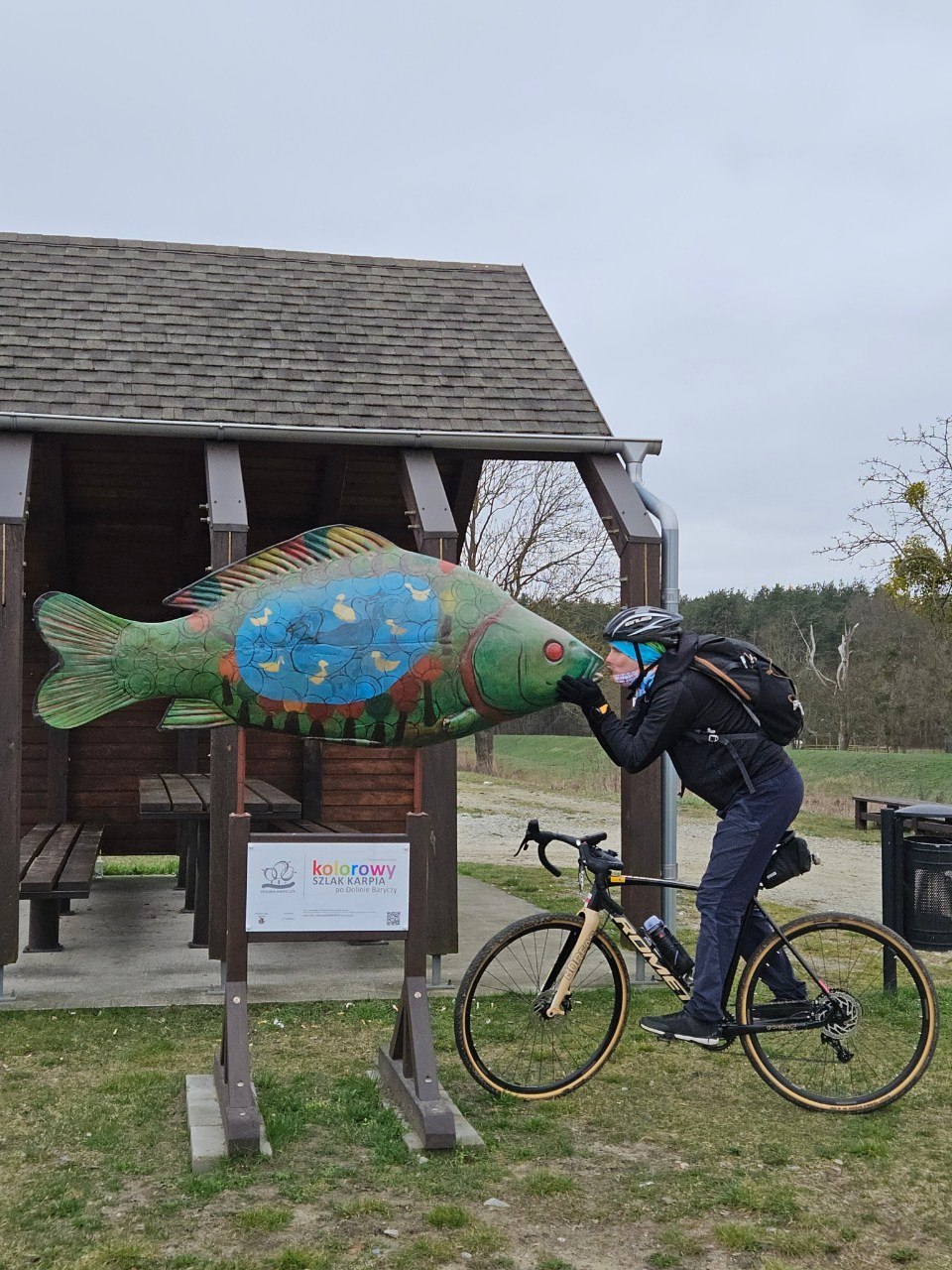
First Lesson in Poland: Learning Not to Cross a Bike Lane Without Looking
The difference in attitude toward cyclists was striking even before the move. During a road trip through Europe, Jerzy was amazed by a several-kilometer-long rubber running track on an island in the middle of Budapest. Later, during a business trip to Poland, it clicked: the cycling environment here isn't just paint on asphalt; it's a living, fast-moving flow.
— Within a couple of days, we learned: you don't cross a bike lane without looking both ways, and you definitely don't walk on it—people ride a lot, and they ride fast. In Belarus at that time, they had also started paying attention to bikes, and the direction was right. Но even at the level of traffic laws, the bicycle remained an "alien element": you had to ride on the sidewalk, which made pedestrians literally hate you.
In Poland, the rules of the game are fundamentally different: a cyclist is required to ride on the road. Adjusting to this psychologically wasn't easy.
— Even now, four years later, on narrow and busy city streets, I sometimes choose to ride slowly alongside pedestrians rather than merge into heavy car traffic.
In Poland, You Don't Have to Be an Enthusiast to Ride
While the development of cycling culture in Belarus largely relied on enthusiasts, in Poland, Jerzy encountered a completely different scale. Here, you don't need to be an organizer to spend every weekend in the saddle at some event.
— The key difference is that in the mid-2010s in Belarus, if you wanted to participate in something worthwhile, you had to organize it yourself. Huge respect to the folks at ARF.by who kept that movement going. By 2019, the event calendar was quite full, regional starts were added, and the dynamic was positive.
But it still doesn't compare to Poland. You'll hardly find a weekend here without some official race or event. Not to mention the endless local "wyprawy" (outings) and "coffee rides." Organizing something of your own feels pointless at first—just pick an event you like and go!
Belarusian Kissel, Duct Tape Numbers, and Complaining About Organizers: Why DIY?
Despite the abundance of official starts in Poland, Jerzy still found a reason to organize his own events. The main reason was the lack of that specific atmosphere found at the legendary home marathons.
— From my running days, I remember: the end of May means "Naliboki." For me, it was a reason to stay in shape over the winter. I chose the 100 km running distance, and you can't just do that "off the couch." Bonding with like-minded people, sleeping in a tent... pure bliss! And pain on the course, of course. Но still bliss.
When I moved to Poland in 2022, the "Naliboki" organizers added a remote format. I hadn't prepared, so I only ran 20 km, but I made them harder with 1,000 meters of elevation gain. A year later, I found out that some guys from Gdańsk were doing "Polish Naliboki" in the Kashubia region.
— It wasn't an official race, but a gathering for those used to "grinding it out" in the woods. The views there are gorgeous, somewhat reminiscent of our Braslaw Lakes: hills and lakes. And, of course, a total lack of a language barrier.
At the end of 2023, a run around Mount Ślęża was organized in Wrocław—an attempt to "cosplay" the Belarusian Logoysk Zhuk-Trail. Jerzy volunteered: he helped scout tracks and cooked traditional Belarusian kissel (a thick fruit drink) at the checkpoint.
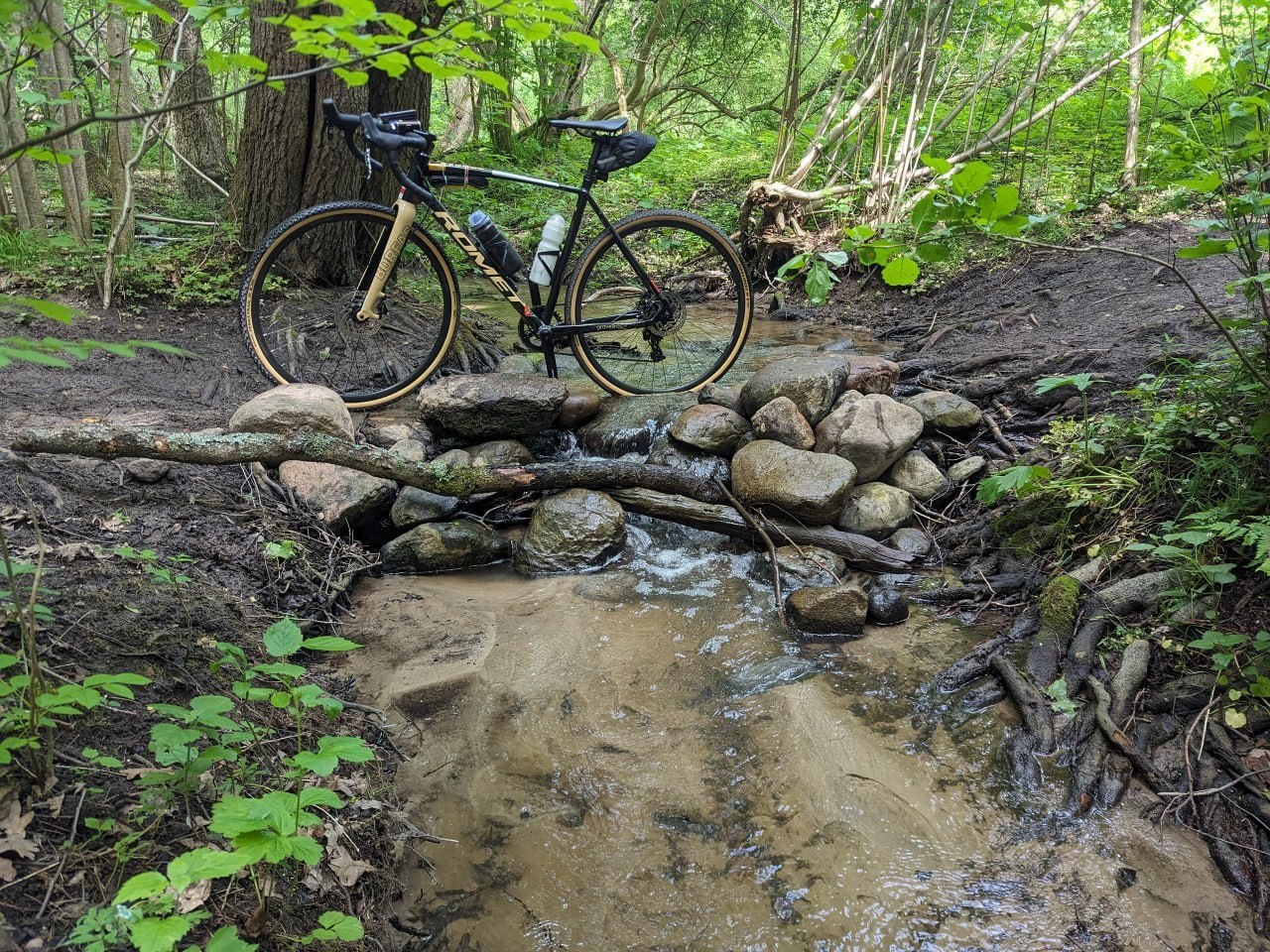
— This is a big difference from Polish events. They have great food stations, but they don't serve kissel anywhere! And in May 2025, "Naliboki" actually took place in Lower Silesia, near the town of Milicz. The landscape there is similar to the Belarusian Polesia: pines, sand, small streams, and marshes. There, I was a full-fledged organizer and worked just as hard as the participants.
These "for us, by us" events gather anywhere from a few people to a few dozen. There are no starting arches; numbers are written with markers on masking tape. The "course markings" are just a GPX track in a chat.
— But people show up, sleep in tents, meet each other, complain about the organizers, and discuss the best moments. Isn't that, at the end of the day, the whole point?
Personal Top Cycling Events in Poland: From Survival Races to Sticker Battles
There is so much cycling action in Poland that it's impossible to fit it all into one article. Jerzy’s list of favorites already looks like a year-long plan:
- Ustawki (Group Rides): NieDamRady (Wrocław) — Sunday rides. They have groups for both road and gravel. It's a great way to meet locals.
- Races and Challenges: Szutry Premium (Wrocław) — a gravel race twice a year. Wisla 1200 — the legendary ultramarathon along the Vistula River. Duch Puszczy — races in the Podlasie region. I love that kind of nature.
- Routes: VeloDunajec — just "one love." Szlak Odra-Nysa — an excellent route along the German border. Locally in Wrocław: the trails around Stawy Milickie and the entire Barycz Valley.
But the most amazing thing in Poland is how cycling culture is instilled from childhood. There is a cool equivalent to "30 Days of Biking" for kids called Rowerowy Maj (Cycling May).
— The idea is that in May, students bike to school, and for every trip, they get stickers. There are individual and team rankings—the class with the best result might win a trip to the cinema. The campaign is super popular: in May, schools in Wrocław have a real problem with bike parking because everything is packed!
The Bike as a Way to Pop the "Remote Work Bubble" and Finally Speak Polish
The language barrier is a tough topic for many migrants. For Jerzy and his family, moving while keeping their old jobs was both a blessing and a trap
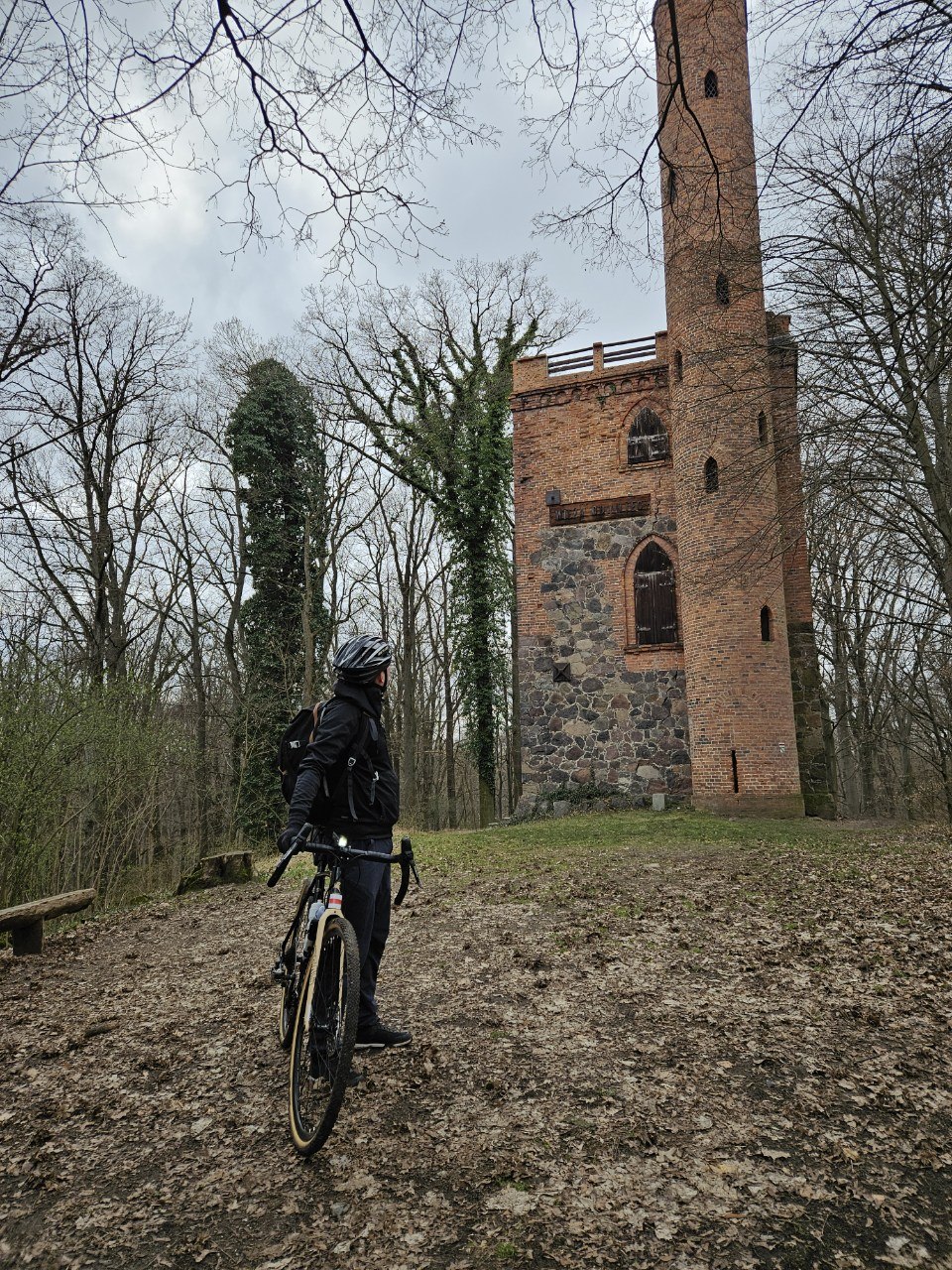
— Early on, a stable income and Russian-speaking colleagues made life very easy. But later, it played a cruel joke: because of remote work, there was no need to use Polish daily. As a result, my comprehension is good, but the practice of speaking and live communication is lacking.
If not at work, new acquaintances are best made through hobbies. Jerzy had a great example: a couple he knew joined a Wrocław running club and significantly leveled up their language skills.
— I decided to follow their lead and started joining "coffee rides" on weekends. It’s a very positive experience: on one hand, new routes; on the other, total immersion in the language environment. A new season is starting now, and I plan to join these outings more often. It’s the best way to finally start talking.
Cycling Vocabulary for Life in Poland
- Ścieżka rowerowa — bike lane.
- Stojak rowerowy — bike rack/stand.
- Ustawka — an informal meeting of cyclists for a joint training session or ride.
- Coffee ride — a relaxed bike outing with a stop for coffee.
- Trasa / Szlak — route / trail (e.g., szlak rowerowy).
- Utyrać się — to get exhausted after an intense ride.
- Opony — tires.
- Punkt odżywczy — food station/checkpoint at races.