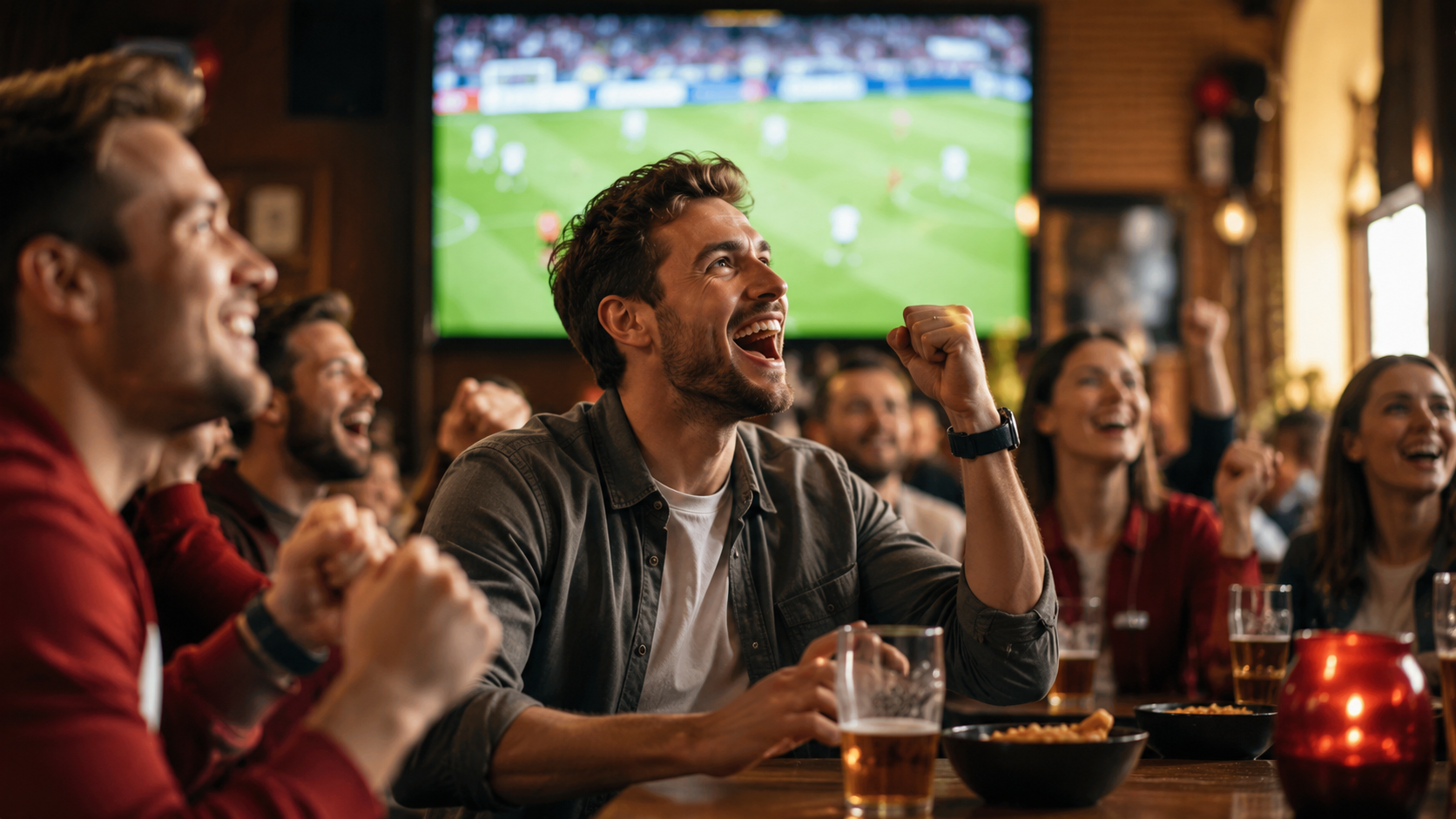
You’ve probably heard the advice: to successfully learn a language, you need to "soak it in." Teachers often recommend listening to podcasts, turning on the radio, watching the news, or watching movies. Of course, this doesn't hurt, but serious immersion in films or podcasts usually requires free time and a fairly high level of the language.
Sports broadcasts are a different story. If you love following matches and competitions, Polish-language broadcasts can become a great learning assistant. First, unlike a feature film, it’s not scary to miss a couple of phrases — the visuals make it clear what’s happening on the field. Second, if you are already a devoted fan, you won't need to carve out extra time for this, and the stress of "not understanding" will be much lower. On the contrary, listening to an emotional Polish commentator is pure pleasure and excitement!
Step One: Finding Broadcasts (Spoiler: It’s Not Easy)
Polish is one of the few European languages where the names of many sports are unique rather than simply borrowed from English. Let’s gather a basic sports vocabulary:
- piłka nożna (football) — from piłka (ball) and noga (leg).
- piłka ręczna (handball) — literally "hand ball."
- koszykówka (basketball) — logically derived from koszyk (basket), which you need to get the ball into.
- siatkówka (volleyball) — comes from the word siatka (net) over which the ball is thrown.
- hokej (hockey)
- tenis (tennis)
- pływanie (swimming)
- biathlon (biathlon)
- narciarstwo (skiing)
- lekkoatletyka (athletics)
- skoki wzwyż (high jump)
- skoki w dal (long jump)
Equipment and Gear:
- piłka — ball.
- kij — used in hockey, billiards, and as a ski pole.
- krążek — puck.
- narty (skis) and kijki (ski poles).
Topic Two: Countries and Nationalities (No Logic, But Very Useful)
The topic of sports in Polish is quite specific, but by watching broadcasts, you will organically get acquainted with two difficult topics — the names of countries and nationalities. It’s pretty tricky, so it's much easier to "listen in" to living speech than to cram rules and exceptions.
Examples in Singular and Plural:
Examples in Singular and Plural:
Country / Resident (Singular) Resident (Plural)
Singular Polak — Polka
Plural Polacy
Singular Niemiec — Niemka
Plural Niemcy
Singular Brytyjczyk — Brytyjka
Plural Brytyjczycy
Singular Japończyk — Japonka
Plural Japończycy
Singular Amerykanin — Amerykanka
Plural Amerykanie
Singular Fin — Finka
Plural Finowie
Singular Norweg — Norweżka
Plural Norwegowie
Singular Włoch — Włoszka
Plural Włosi
Singular Francuz — Francuzka
Plural Francuzi
Singular Szwed — Szwedka
Plural Szwedzi
Singular Chińczyk — Chinka
Plural Chińczycy
Singular Argentyńczyk — Argentynka
Plural Argentyńczycy
Topic Three: Degrees of Comparison (Who is the Best of the Best?)
By turning on a match, you will definitely hear najszybszy (fastest), lepszy (better/best), or silniejszy (stronger). Commentators will help you soak up various adjectives to enrich your vocabulary if all you know right now is piękny (beautiful), dobry (good), and zły (bad).
Practice Examples:
- szybki — szybszy — najszybszy (fast — faster — fastest)
- silny — silniejszy — najsilniejszy (strong — stronger — strongest)
- wysoki — wyższy — najwyższy (tall — taller — tallest)
- dobry — lepszy — najlepszy (good — better — best)
- groźny — groźniejszy — najgroźniejszy (dangerous — more dangerous — most dangerous)
Turn on the next broadcast of your favorite team, relax, and learn the language with pleasure!
How to start using all this in practice faster?
Alongside "soaking in" the language through sports, of course, the best approach is to take structured classes. Our school offers course options for any schedule. You can study Polish intensively or at a relaxed pace, online or offline, in groups or individually.
Choose the right learning format here.
Choose the right learning format here.